INTRUCTIONS FOR AUTHORS
Author Guidelines
Jurnal Vokasi Teknik (JUVOTEK) | J. Vok. Tek.
Jurnal Vokasi Teknik (JUVOTEK) | J. Vok. Tek. is an open-access, peer-reviewed scholarly journal dedicated to disseminating high-quality research that advances vocational engineering education, applied engineering sciences, industrial innovation, and technological development. The journal welcomes manuscripts that contribute original knowledge, practical solutions, methodological innovations, or critical syntheses capable of supporting scientific advancement and industrial practice.
The Editorial Board invites submissions from researchers, academics, practitioners, engineers, and professionals worldwide. Every manuscript is assessed solely on its scholarly merit, methodological rigor, originality, and contribution to the advancement of engineering and technology.
Authors are encouraged to read these instructions carefully before preparing and submitting their manuscripts. Compliance with these guidelines facilitates an efficient editorial process and improves the quality and consistency of published articles.
JUVOTEK seeks manuscripts that:
- Present original scientific findings.
- Address relevant engineering and technological challenges.
- Demonstrate methodological soundness.
- Provide theoretical, empirical, or practical contributions.
- Encourage interdisciplinary collaboration.
- Promote innovation within vocational and applied engineering.
The journal welcomes submissions from a broad range of engineering disciplines, including but not limited to:
Interdisciplinary research integrating multiple engineering fields is strongly encouraged.
Submitted manuscripts must represent original scholarly work and must not have been published previously, either in whole or in part, nor be simultaneously under consideration by another publication.
Submission of a manuscript constitutes confirmation that:
- All authors approve the submitted version.
- All listed authors have made substantial scholarly contributions.
- The manuscript is free from plagiarism.
- Data are presented honestly without fabrication or manipulation.
- Ethical standards have been observed throughout the research process.
Manuscripts may be submitted in English or Bahasa Indonesia. English submissions are strongly encouraged to enhance international readership.
Authors whose first language is not English are advised to have their manuscripts reviewed by competent English editors before submission. Language quality alone does not determine editorial decisions; however, manuscripts with poor readability may be returned for language revision prior to peer review.
Manuscripts should be prepared using the official journal template available on the journal website.
The manuscript should be concise, coherent, and logically organized. Authors are encouraged to avoid unnecessary repetition while ensuring sufficient methodological detail for reproducibility.
A manuscript should generally include the following sections:
Depending on the nature of the research, Results and Discussion may be presented either separately or as an integrated section.
- Tables and figures must be prepared to publication quality.
- Graphical elements must be clear, readable, and sufficiently high in resolution, with a recommended minimum of 300 dpi.
- Every table and figure must be cited sequentially in the manuscript.
- Equations should be created using an equation editor, not inserted as images.
- Mathematical symbols must be defined upon first use.
- Variables must be presented consistently throughout the manuscript.
Authors are encouraged to use reference management software such as Mendeley, Zotero, or EndNote to ensure citation consistency.
As general guidance:
- Use at least 20 references.
- At least 80% should originate from peer-reviewed journal articles.
- Give preference to literature published within the previous ten years.
- Where possible, cite articles indexed in reputable databases such as Scopus, Web of Science, DOAJ, or nationally accredited journals.
Scientific integrity forms the foundation of every published article.
- Plagiarism is prohibited.
- Duplicate publication is prohibited.
- Data fabrication and falsification are prohibited.
- Citation manipulation is prohibited.
- Image manipulation is prohibited.
- Inappropriate authorship practices are prohibited.
- Generative artificial intelligence may be used as a language-assistance tool.
- AI systems must not be credited as authors.
- Substantial AI assistance must be disclosed in an appropriate statement.
- Authors remain fully responsible for the accuracy, originality, interpretation, and integrity of the manuscript.
Authors are encouraged to preserve research data supporting published findings. Where appropriate, datasets may be deposited in recognized repositories.
Any restrictions on data availability should be clearly explained within the manuscript.
Authors must disclose any financial, institutional, professional, or personal relationships that could reasonably influence the interpretation of the research.
All sources of financial support must be disclosed.
Authors are encouraged to specify individual contributions using the CRediT Contributor Roles Taxonomy.
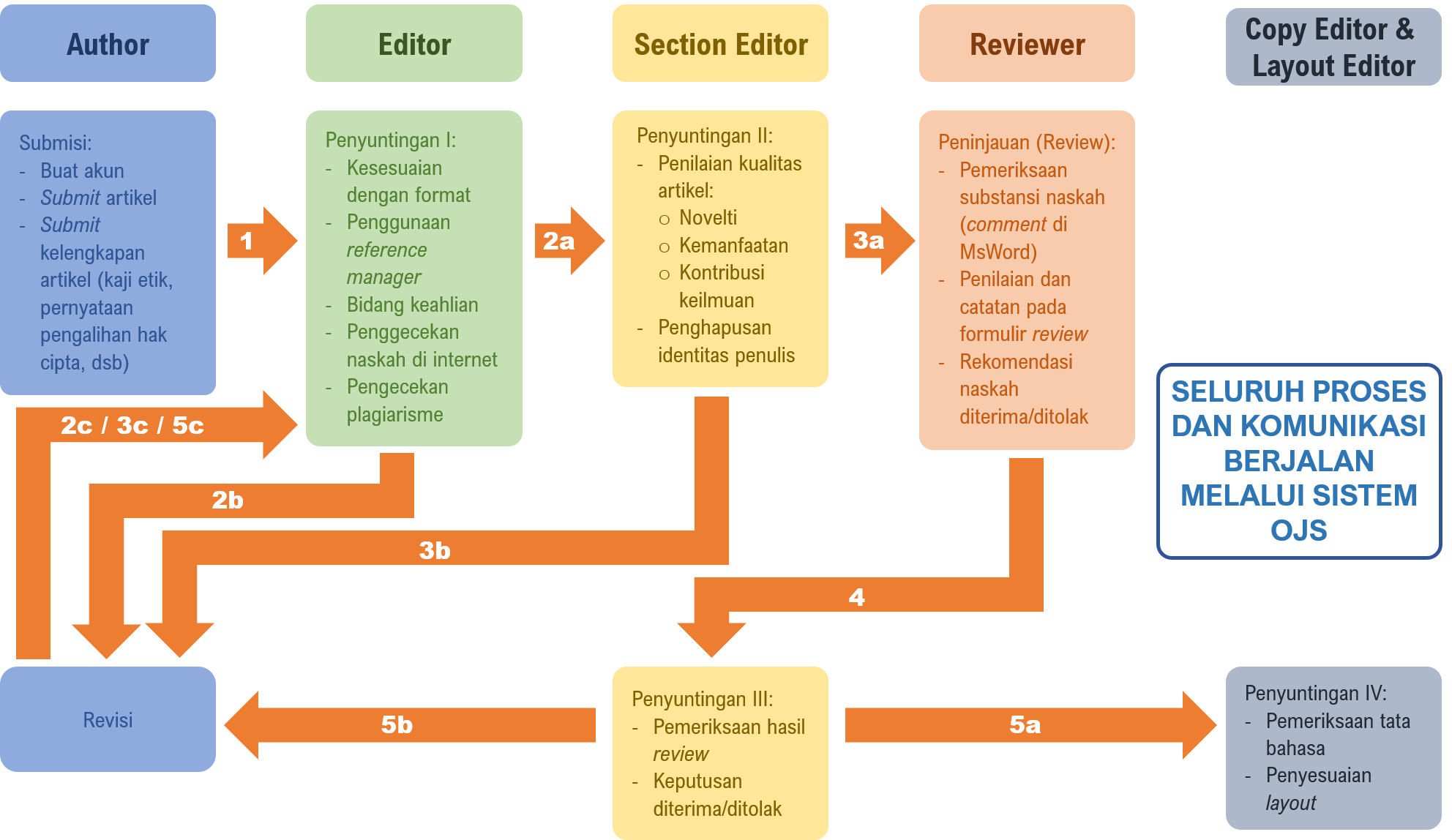
Every submission undergoes an initial editorial assessment to determine its suitability for the journal’s scope and editorial standards.
Suitable manuscripts proceed to a double-blind peer review conducted by at least two independent reviewers possessing relevant expertise.
Editorial decisions are based on originality, scientific significance, methodological quality, clarity of presentation, and contribution to engineering knowledge.
Authors retain copyright of their published work while granting the journal the right of first publication.
Published articles are freely accessible under the journal’s Open Access policy to maximize the dissemination and impact of scholarly research.
The Editorial Board appreciates the trust placed in JUVOTEK by researchers worldwide. By submitting a manuscript, authors contribute not only to scientific communication but also to the advancement of engineering innovation, vocational education, and sustainable technological development. The journal is committed to maintaining high standards of scholarly publishing through fairness, transparency, editorial independence, and academic integrity.